[00:00:00] Speaker A: It's time for California law updates. Simplified the show for California property managers, owners and HOA board members, bringing clarity to California ordinances and compliance requirements.
So whether you manage properties, you're thinking about it or you just find the stuff interesting, this deep dive is for you. It's a shortcut to understanding some frankly surprising stuff.
Let's get into it. Because this eviction landscape, it's a minefield, definitely.
[00:00:30] Speaker B: The expert was pretty blunt. He said the rules for getting your property back are so varied and from his view, often designed by politicians to make you lose.
[00:00:41] Speaker A: He actually said that? Wow.
[00:00:42] Speaker B: Yeah. He argued the goal often seems to be to give tenants an unfair advantage or let them game the system. That was his perspective anyway.
[00:00:50] Speaker A: And the stakes are incredibly high. He. He stressed that any small little error, just one tiny thing, can mean losing your case.
[00:00:58] Speaker B: Right, and losing means what? It means eating like three to four months worth of lost rent.
[00:01:02] Speaker A: Rent you almost never get back.
[00:01:04] Speaker B: Exactly. That's a huge financial hit. Plus the stress.
[00:01:07] Speaker A: So the whole idea of just doing it yourself, the DIY approach, forget it.
[00:01:11] Speaker B: Back in the day, maybe simple three day notices were easier. But now the expert said finding a simple form that actually works is almost impossible.
[00:01:21] Speaker A: So most people who try it themselves.
[00:01:22] Speaker B: They end up having a law firm redo it anyway. His advice was really clear. Talk to a law firm before you serve anything.
[00:01:29] Speaker A: Makes sense. Pay a bit upfront to avoid losing thousands later.
[00:01:33] Speaker B: Precisely.
[00:01:34] Speaker A: Okay, so let's dig into the specifics. The most basic notice. Right, the notice to pay rent or quit. What's the absolute number one rule there?
[00:01:42] Speaker B: Rent. And only rent. That's critical. You cannot include late charges, parking fees, other things like SCEP fees in la, or registration fees. Just the rent amount, just the base rent owed. Anything else invalidates the notice straight up.
[00:01:59] Speaker A: Okay, and what about old rent? Is there a limit? The one year rule?
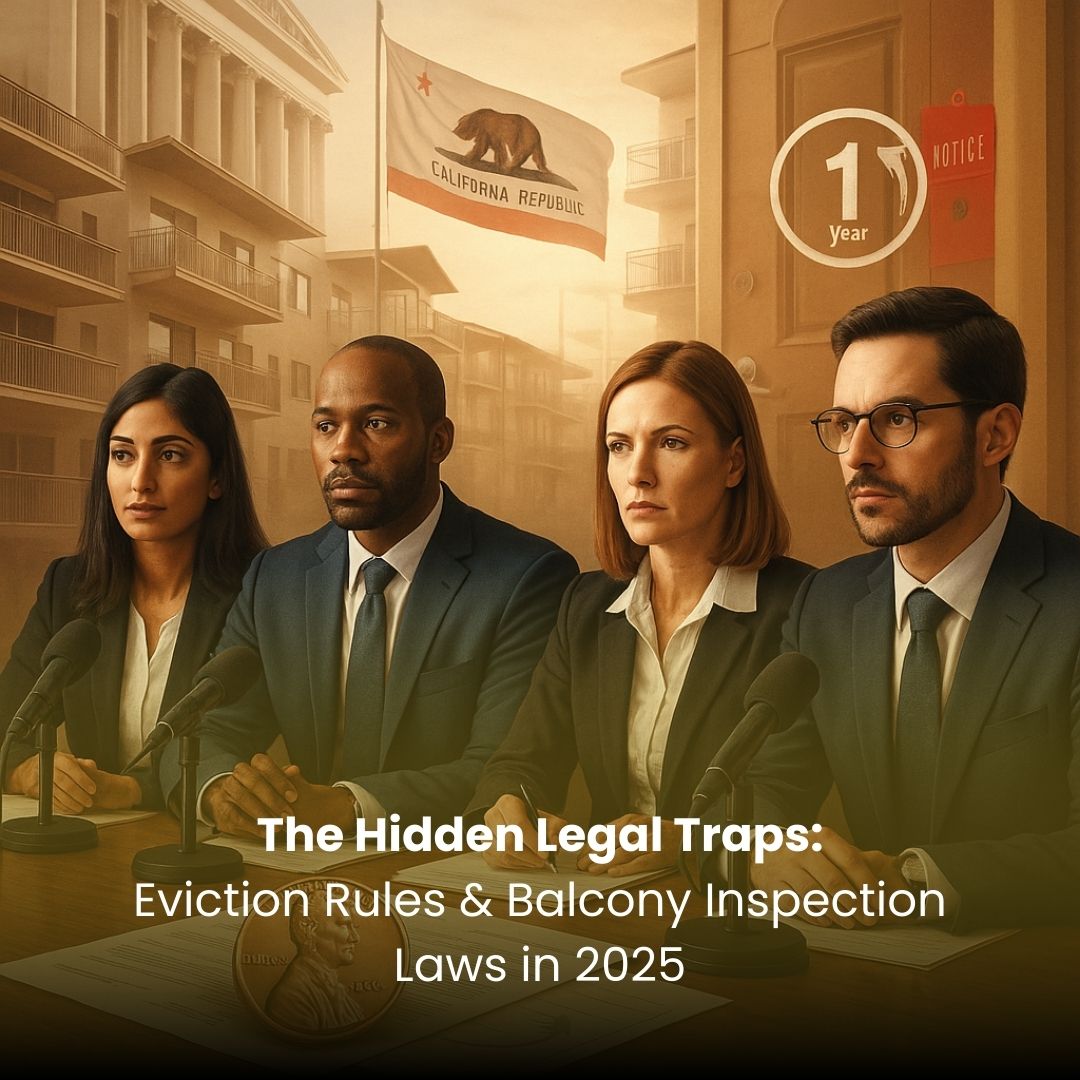
[00:02:02] Speaker B: Yeah, that surprises people. You can't demand rent that's more than one year old.
[00:02:06] Speaker A: So like if it's August 2025, you.
[00:02:08] Speaker B: Could only go back to September 2024, even if they owe you rent from, you know, way before that.
[00:02:12] Speaker A: And how does that work? When they make a payment, usually the.
[00:02:15] Speaker B: Payment applies to the oldest debt first, unless the tenant writes on the check, like for August rent. Otherwise it chips away at the earliest month they owe you to track it carefully.
[00:02:24] Speaker A: Got it. Now tell me about this penny trap. This sounds wild.
[00:02:28] Speaker B: It is wild. Especially in rent controlled areas. If you ask for one penny too much rent, literally one cent over, you lose, you lose your case.
[00:02:36] Speaker A: It's that strict, so it's better to ask for less.
[00:02:39] Speaker B: Absolutely. Being understated is fine. The expert even joked, if you're unsure, just lop off another 300 bucks to be safe. It shows how hyper technical it all is.
[00:02:49] Speaker A: It really does.
Okay, another hyper technical one, especially for LA RSO properties.
Security deposit interest.
Sounds minor, right?
[00:02:59] Speaker B: Sounds minor, but it's a huge trap. In places like la, landlords have to pay yearly interest on security deposits for RSO properties.
[00:03:07] Speaker A: Yearly.
[00:03:08] Speaker B: Okay. And if you forget or you don't credit it, even if it's just, say, $15.
[00:03:12] Speaker A: 15 bucks?
[00:03:13] Speaker B: Yep. That makes your notice incorrect. And the tenant can use that as a defense to fight the eviction, even.
[00:03:18] Speaker A: If the tenant did something serious. Like the expert mentioned a hypothetical tenant shooting up the courtyard.
[00:03:23] Speaker B: Even then forgetting that $15 interest payment could potentially derail your entire case. It's incredible.
[00:03:29] Speaker A: And the interest rate itself is high.
[00:03:31] Speaker B: Yeah. The Expert sounded amazed. For 2025, it's 4.32%. And he pointed out that's higher than you get at most banks right now.
[00:03:38] Speaker A: Where can people find those rates?
[00:03:40] Speaker B: The expert mentioned checking sites like evic123.com in their legal issues section. They usually have charts crucial to stay updated.
[00:03:49] Speaker A: Okay, quick recap on the Pay rent or quit notice. Rent only, nothing older than a year. Don't ask for a penny too much. And pay that darn security deposit interest. Miss one, you're sunk.
[00:04:00] Speaker B: That's the gist of it. Precision is everything.
[00:04:03] Speaker A: So once you have the amount. Right. What about the actual form of the notice? The wording, the details.
[00:04:08] Speaker B: Right. More details. The notice absolutely must state that Saturdays, Sundays and judicial holidays are excluded when you count the notice days.
[00:04:15] Speaker A: That exact phrase.
[00:04:17] Speaker B: That exact phrase. Leave it out. And the notice is defective under state law. Period.
[00:04:21] Speaker A: And who needs to be named on it? Just the main tenant.
[00:04:23] Speaker B: Nope. Everyone listed on the rental agreement. Plus any other adults living there whose name that you know?
[00:04:28] Speaker A: Even suptenance?
[00:04:29] Speaker B: Yes, if you know their names. But not minors. Minors are excluded.
[00:04:33] Speaker A: Okay, payment details. This sounds simple, but apparently not. Who do they pay? Where do they pay?
[00:04:38] Speaker B: Yeah, lots of pitfalls here. For who? You need an individual's name listing. Just XYZ Apartments LLC isn't enough. You need a person's name, too.
[00:04:46] Speaker A: A real person. Got it.
[00:04:48] Speaker B: And where you need a physical address where they can actually hand over the payment manager's office, a P.O. box owner's mailing address, Maybe a rent Dropbox somewhere concrete.
[00:04:59] Speaker A: What about online payments? Zelle Venmo.
[00:05:02] Speaker B: That stuff you can offer it, but you cannot just say zelle it to me. The notice must still provide one of those physical options. An address, a PO box or bank details.
[00:05:12] Speaker A: Ah, okay. So if you do list a bank.
[00:05:14] Speaker B: Account, then you need more details. The bank's name, the account number, an address for a branch within five miles of the property and that branch's operating hours. Like Chase Bank. 9 to 5 MF 9 to 2 SAT.
[00:05:27] Speaker A: Wow, that's specific.
[00:05:28] Speaker B: Very specific.
[00:05:29] Speaker A: In LA City and unincorporated LA County. Add even more. Right?
[00:05:33] Speaker B: Yep. More layers in those areas. The notice also has to state the number of bedrooms. Just, you know, one bedroom or two bedroom.
[00:05:39] Speaker A: Okay. And the fair market value thing, Right?
[00:05:42] Speaker B: It must include the fair market value for that unit size. Yeah, the expert gave an example. Like $2081 for a one bedroom.
[00:05:48] Speaker A: Why is that needed?
[00:05:49] Speaker B: It sets a threshold.
The idea is you can't use a standard three day notice to evict someone if the rent they owe is less than that fair market value. So if they owe like $100 and the fair market value is $2,000, you can't use the three day pay or quit for that small amount. It prevents evictions over very minor sums.
[00:06:09] Speaker A: I see, so that's for rent. What if the problem isn't rent? Like unauthorized pets, extra people living there?
[00:06:15] Speaker B: Then you use a notice to perform or quit. This one spells out the lease violation.
[00:06:19] Speaker A: How detailed does it need to be?
[00:06:21] Speaker B: Pretty detailed. The form usually guides you. You need to state what the violation is, who saw it, when it happened, and exactly what the tenant needs to do to fix it and by when.
[00:06:30] Speaker A: Like get rid of the unapproved dog within three days?
[00:06:33] Speaker B: Essentially, yes. Or have the unauthorized occupants move out within three days. Clear instructions.
[00:06:38] Speaker C: Today's episode is brought to you by Dr. Balcony, California's leading balcony inspection company for SB326 and SB721 compliance. With over 4,000 inspections completed, Dr. Balcony uses a patented, minimally invasive process that protects your property while ensuring safety and compliance. Servicing all of California while providing fast inspection report turnaround and backing it up with a 20% price beat guarantee, beating any competitor's bid by 20%.
Learn
[email protected] welcome to the deep dive.
[00:07:15] Speaker A: We're here to take those really dense regulations and well, make them make sense for you. Right now. Today we are tackling something huge in California.
Exterior, elevated elements or ees.
Safety, legal stuff, finances, it's all tied up in this.
[00:07:32] Speaker B: Yeah, these are really high stakes mandates. We're talking SB721 and SB326, the balcony inspection laws, they came about because of, well, some awful events. And the clock is ticking. For a lot of folks, deadlines are either here or coming up fast.
[00:07:45] Speaker A: Right? And look, we're not trying to scare anyone, but the facts are pretty stark. You've got, what, over 6,000 injuries a year from these kinds of incidents?
[00:07:52] Speaker B: That's right. And tragically, around 140 kids die. The core issue, deck and balcony failures are up 21% year over year. It almost always comes down to one thing. Wood deterioration. Wood rot.
[00:08:04] Speaker A: The hidden rot. That's the real danger, isn't it?
[00:08:06] Speaker B: Exactly. So our mission today is pretty clear. Walk you through these laws, show you how they force you to find that rot, what your legal duties are, and importantly, how to handle the liability side of things.
[00:08:16] Speaker A: Okay, let's lay the groundwork. Exterior. Elevated element. EE.
What exactly is that? It's not just any old patio, is it?
[00:08:25] Speaker B: No, it's specific.
The law defines it very carefully. To hit the biggest risk areas.
Three main things.
One, it's got to be six feet or more off the ground.
[00:08:35] Speaker A: Okay, six feet.
[00:08:36] Speaker B: Two, it needs a walking surface somewhere. People are actually meant to walk.
[00:08:40] Speaker A: Right.
[00:08:41] Speaker B: And three, this is the crucial part. It relies partly, or maybe entirely on wood for its structure, for support.
[00:08:49] Speaker A: Ah. Okay, so if I've got something built purely out of concrete and steel, I'm good. Exempt?
[00:08:54] Speaker B: Pretty much. But if there's even one wood joist holding up that walkway, then it counts.
[00:08:58] Speaker A: It's in.
[00:08:58] Speaker B: Yep. Think balconies, elevated walkways, decks, porches, stairs, even landings, if they fit the criteria.
[00:09:05] Speaker A: What about those little Juliet balconies? The ones you can't really walk on?
[00:09:08] Speaker B: Good question. Those are usually exempt. No real walking surface. So they fall outside the definition.
[00:09:12] Speaker A: Okay, that context helps, but these strict rules, they didn't just appear, did they? They came from somewhere specific. That 2015 incident, that was the big one.
[00:09:20] Speaker B: The Berkeley incident, Just awful. Thirteen young people, mostly students, on a balcony.
[00:09:25] Speaker A: It collapsed, fell 40ft.
[00:09:27] Speaker B: Yeah. Six died, seven were very seriously injured. And the investigation found severe dry rot. The kicker, the building was only nine years old.
[00:09:38] Speaker A: Nine years old. Wow. That really drives home that this isn't just an old building problem.
[00:09:42] Speaker B: Exactly.
Bad flashing, maybe. Poor drainage, moisture gets trapped. And that rot can start fast. It's like a ticking clock inside the walls.
[00:09:50] Speaker A: And we almost saw again just recently. Right? Silver Lake, 2025.
[00:09:54] Speaker B: Yeah, that was a close call. Four people and a dog fell when a balcony gave way. Luckily, another balcony below caught them. Worse injury was A broken arm, thankfully.
[00:10:03] Speaker A: But it shows the risk is always there, even with seemingly minimal weight.
[00:10:07] Speaker B: Absolutely. And that's why property owners, managers, you need to keep your eyes open even before an official inspection.
[00:10:14] Speaker A: What should they look for?
[00:10:15] Speaker B: Well, if the wood parts are exposed, looks for cracks, soft spots, maybe railings that feel wobbly. Any sign water's getting in, like stains underneath?
[00:10:23] Speaker A: Moisture is the enemy here.
[00:10:24] Speaker B: It's the accelerant, definitely. So things like pools nearby, or even lots of heavy planters on the deck itself, they can speed up the rot significantly.
[00:10:32] Speaker A: Okay, so let's dig into the laws themselves. Properties with three or more units, two different laws. SB 721 for apartments, SB 326 for condos, HOAs. It's not just about knowing a deadline. You need to know your deadline and your rules. Right, because they're different, massively different, and.
[00:10:48] Speaker B: You absolutely need to know which one applies. Let's start with Apartments SB721. Their final deadline got pushed back a year. It's now December 31, 2025. After that first inspection, they need to do it every six years.
[00:11:00] Speaker A: Every six years. And the inspection itself, how much do they have to check?
[00:11:04] Speaker B: For apartments under 721, it's a minimum 15% sample. So they look at 15% of each type of EE on the property, 15% of the balconies, 15% of the walkways, etc.
[00:11:13] Speaker A: Hold on. Only 15%? If the big worry is hidden rot you can't see, isn't sampling like that a bit risky? Compared to what hoas have to do, it is.
[00:11:22] Speaker B: You're right. It's a calculated risk. Essentially, the thinking, I believe, was that apartment Es are often tied to single units, so the risk is maybe more contained. It's kind of a balance attempt between safety and costs for landlords. But yeah, the trade off could mean higher risk for tenants in those units that don't get inspected.
[00:11:40] Speaker A: Okay, so contrast that 15% sample for apartments with the HOAS SB326. What's their situation?
[00:11:47] Speaker B: Much tougher for HOAs and condos. SB326 applies. And their deadline, December 31, 2024. It's already passed.
[00:11:55] Speaker A: Passed. Wow.
[00:11:56] Speaker B: Their cycle is longer every nine years, but the inspection has to cover way more ground. They need a 95% confidence rate, which means, practically speaking, it means they have to inspect all the ease, especially because these are often common areas. Walkways, big shared decks. The liability is shared across all owners.
[00:12:13] Speaker A: That makes sense. Shared risk, shared inspection burden. And the inspectors themselves. Remember that's different, too.
[00:12:18] Speaker B: Big difference. For 721 apartments, you've got four structural engineer, architects, licensed general contractor, or even a qualified certified home inspector.
[00:12:27] Speaker A: But for 326, for the HOAS, only.
[00:12:30] Speaker B: Two options, a licensed structural engineer or a licensed architect. That's it.
[00:12:36] Speaker A: Why the stricter requirement there?
[00:12:37] Speaker B: It boils down to liability. Again, because it's common areas. The potential impact of a failure is huge and shared. The state decided only those with the highest level of professional licensing, and importantly, the ones carrying the highest professional liability insurance, could sign off.
When they stamp that report, they're taking on serious responsibility.
[00:12:56] Speaker A: So for HOAS, that deadline passing December 31, 2024, what are the immediate consequences we're seeing for associations that missed it? Are there legal fights, insurance issues?
[00:13:08] Speaker B: Oh, absolutely. It's happening right now.
[00:13:10] Speaker A: Yeah.
[00:13:10] Speaker B: Insurance companies are getting tough. We're seeing them refuse to renew policies for hoas that don't have proof of compliance, or they're jacking up the premiums like crazy.
[00:13:18] Speaker A: And what about selling units?
[00:13:20] Speaker B: Big problems there, too. Lenders, quite reasonably, want to see that the HOA is compliant before they'll approve a mortgage or refinance. So unit sales can get completely stalled.
[00:13:30] Speaker A: So if you're a homeowner in an HOA and you suspect your association hasn't done this yet, what should you do?
[00:13:37] Speaker B: You should definitely raise the issue first. But honestly, you might want to consider getting an individual inspection done for the elements directly affecting your unit or liability just to protect yourself.
[00:13:49] Speaker A: Okay, let's talk about the inspection itself. Drilling holes in stucco sounds kind of alarming for property owners. What's that process actually like?
[00:13:58] Speaker B: Yeah, people worry about that. But it's necessary for those enclosed elements. If the wood's exposed, sure, it's mostly visual, maybe a moisture meter. But for EEs covered in stucco or siding, you have to see inside. So we use what's called minimally invasive testing.
[00:14:14] Speaker A: Minimally invasive. What does that mean, day to day?
[00:14:17] Speaker B: It means drilling a few small holes, usually about the size of a nickel, maybe 2 or 3 inches deep, into the enclosure near the structural wood.
[00:14:24] Speaker A: Okay.
[00:14:25] Speaker B: Then we insert a tiny camera, it's called a borescope, right into that hole. It lets the inspector see the condition of the wood inside, take pictures, get a real look.
[00:14:34] Speaker A: And that intrusive look is vital, you're saying?
[00:14:36] Speaker B: Absolutely critical. I can't tell you how many times we've seen a balcony that looks perfect on the outside. You know, fresh paint, no cracks visible. But the borescope shows the joist inside are just mush.
Completely rotted. Visual inspection alone would miss it completely.
[00:14:53] Speaker A: Okay, so the inspection's done. Maybe they use the borescope. Now, the report. What needs to be in that report for it to be compliant? It's not just a thumbs up, thumbs down?
[00:15:01] Speaker B: No, definitely not. It's a formal document. It has to list all the EEs on the property. It needs detailed evaluations, photos are required, and it must clearly state the condition.
Pass non emergency failure or emergency failure. It also has to include an estimate of the remaining useful life of the element, recommendations for maintenance, and this is key. It must be stamped and signed by that licensed professional. That stamp transfers the liability.
[00:15:27] Speaker A: Okay, the scary part.
What if an element fails the inspection? Let's talk timelines. Start with non emergency failure. That's the most common, right?
[00:15:35] Speaker B: Right. So non emergency means there's an issue, it needs fixing, but it's not about to collapse tomorrow. No immediate danger. The inspector has 45 days to get you the report.
Once you, the owner, receive it, you have 120 days to apply for the necessary repair permits from your city or county.
[00:15:53] Speaker A: 120 days just to apply for permits? That sounds like where things could really get held up.
[00:15:59] Speaker B: That's often the biggest hurdle. Permitting departments can be really backed up, especially with everyone trying to comply with these laws now.
[00:16:05] Speaker A: So what's the advice there? How do owners manage that window?
[00:16:08] Speaker B: Smart move. Have your engineer or architect start drafting the repair plans while the inspection is happening or immediately after. Don't wait for the official report to land on your desk. Get ahead of it.
[00:16:19] Speaker A: Right. Shave off some time.
[00:16:20] Speaker B: Exactly. Once you get that permit approved, then you have another 120 days to actually complete the construction. Sometimes you can get a small extension, maybe 30, 60 days.
[00:16:29] Speaker A: So best case, you're looking at what, almost a year from inspection to completed repair?
[00:16:35] Speaker B: Easily. Sometimes longer, depending on the permit backlog and contractor availability.
[00:16:39] Speaker A: Okay, now the other category. Emergency failure, immediate threat. What happens then?
[00:16:44] Speaker B: Things move much, much faster.
[00:16:46] Speaker A: Yeah.
[00:16:46] Speaker B: The inspector has to get that report to the owner and the local authorities within 15 days.
[00:16:51] Speaker A: 15. Okay.
[00:16:52] Speaker B: And immediate action is required. That means putting up temporary supports, shoring, or completely blocking off access to the dangerous area right away.
You have to apply for permits within 15 to 30 days, depending on local rules. And you basically need to start the repair work the minute those permits are in hand. No grace period.
[00:17:10] Speaker A: This really highlights that three step process you mentioned. Inspection, then permits, then construction. You absolutely cannot skip that middle step, the permits.
[00:17:20] Speaker B: No way. Even if you think it's a simple fix, the local building department must approve the repair plans to ensure they actually address the structural problem found in the inspection and meet current codes. If you try to shortcut it. Do repairs without permits, you'll likely fail the next inspection and have to tear it all out and do it again. Very expensive mistake.
[00:17:39] Speaker A: And if you miss these deadlines for the inspection itself or for getting those permit applications in, there are penalties, right?
[00:17:46] Speaker B: Oh, yeah. The fines aren't small. They can range from $100 up to $500 per day.
[00:17:51] Speaker A: Per day?
Ouch.
[00:17:54] Speaker B: Yeah. Local jurisdictions use those fines to push for compliance because public safety is on the line. And that's on top of the insurance headaches and of course, the huge liability if something actually collapses.
[00:18:06] Speaker A: Okay, so if you're listening and thinking right, I need to hire someone. How do you make sure you get the right inspector? Someone who knows the law and gives you a report that actually works?
[00:18:15] Speaker B: Good question. There's a checklist, basically. First, go to the state licensing board website. Verify their license is active, no disciplinary actions. Simple first step.
Second, double check they're qualified for your specific law. Remember, if you're an HOA needing an SB326 inspection, a general contractor or a home inspector won't cut it. You need that PE or architect.
The law actually specifies five years of relevant experience.
Ask them about it. You want someone who really understands how these structures fail, how wood behaves over time.
[00:18:46] Speaker A: Five years minimum.
[00:18:48] Speaker B: And ask for a sample report before you sign anything. Look through it. Does it have photos? Does it talk about future life expectancy maintenance? Is there a clear spot for that? All important stamp and signature and the method crucial point. Ask them how they inspect enclosed elements. If you just say visual inspection, that's a red flag. You need them to confirm they do the minimally invasive testing, the borescope, to find that hidden rot. Don't settle for just a surface look.
[00:19:14] Speaker A: Good advice.
[00:19:15] Speaker C: Yo, your balcony's cracked. It's looking kind of shady. Dr. Balcony will save it, baby. SB326, we got your back. SB721, we're on the right track. Dot the balcony. Be, inspect and protect BE pits by 20%. That's a flex guaranteed service. You know it's legit. Call us now and we'll handle it. Quick, quick.
845-312-8858. Don't hesitate. Email
[email protected]. your balcony's future is looking strong.